KUBOTA DPF DELETE
Why Kubotas clog and big tractors mostly do not
A particulate filter cleans itself by getting hot. Work an engine hard and the exhaust stays above roughly 350 °C on its own, the trapped soot burns off continuously, and the driver never knows it happened. That is passive regeneration, and it is what the system was designed around.
Now take a Kubota. An SVL90-2 shunting pallets around a yard, an M6060 on a topper, a U55-4 idling between trenches — none of these get near that temperature for any length of time. So the filter loads up, and the control unit does the only thing it can: it injects extra fuel to force the temperature up. That is active regeneration, and on these machines it is not the exception, it is the routine.
What that costs
- Fuel that does no work. Every forced regeneration burns diesel purely to heat a filter.
- The machine stops being useful. Many regenerations require the machine to be parked at raised idle until the cycle completes.
- Oil dilution. Post-injection fuel washes past the rings. On a small engine with a small sump, that matters sooner.
- Eventually, a filter that will not clean. Once ash has accumulated past the point regeneration can help, the only options are a bake or a new filter.
What a Kubota DPF delete does
The calibration is rewritten so the engine no longer manages a filter: no soot model, no post-injection, no regeneration cycle, and no differential-pressure logic waiting to declare a blockage. The engine runs its own fuelling map and nothing else.
Frequently Asked Questions (FAQs)
- My loader regenerates twice a week. Is that normal? For a machine that idles as much as a skid steer, unfortunately yes. It is the duty cycle, not a fault.
- Will it smoke? Not if the calibration is done properly. A correct map produces less soot in the first place rather than relying on a filter to catch it.
- Can this be combined with EGR work? Yes, and on small-displacement Kubotas the two belong together — see the EGR page.
Kubota® is a registered trademark of Kubota Corporation. Tuning24 is not affiliated with, authorised by or endorsed by Kubota Corporation; the name is used here only to identify the equipment our services are compatible with.
FIND YOUR CLOSEST DEALER
Kubota DPF Delete: how it works, and what it costs you
The technical picture is worth understanding before you decide, because the argument for this work on a Kubota is genuinely different from the argument on a large agricultural tractor.
Technical process
The control unit maintains a soot model: an estimate, corrected by a differential pressure sensor, of how much particulate is sitting in the filter. Past a threshold it starts an active regeneration by injecting fuel late in the cycle, raising exhaust temperature until the soot oxidises. A delete removes the model, the trigger, the post-injection strategy and the derate that follows a failed regeneration attempt. The fuelling and boost maps are then rebuilt to suit an engine that is no longer being asked to feed a filter.
Advantages on a Kubota specifically
- The regeneration interruptions stop. On a loader or a municipal tractor this is usually the whole reason for the job.
- Fuel used per hour drops, because none of it is being spent on heat.
- Oil dilution from post-injection ends, which on a small sump is a real service-life question.
- One expensive consumable and its sensors are no longer in the exhaust to fail.
Disadvantages of a Kubota DPF delete
- Particulate output rises. That is the honest trade, and it is the point of the filter.
- Type-approval no longer holds, with whatever consequences that carries where you work.
- Machines sold into inspected markets are harder to move on.
- Without the original calibration saved, the change cannot be undone.
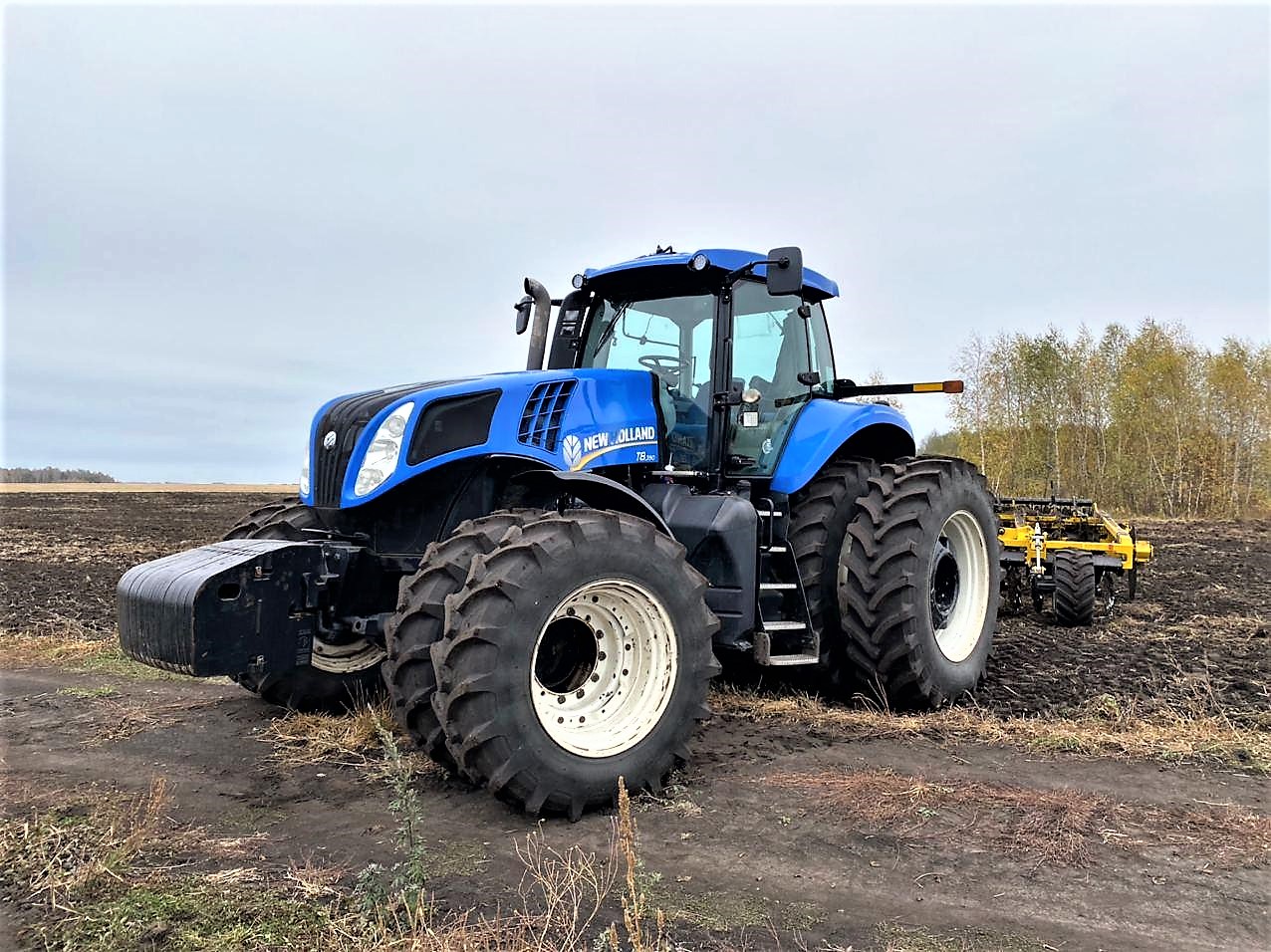
New Holland T8.390 Performance Upgrade & AdBlue System Removal
New Holland T8.390 Performance Upgrade & AdBlue System Removal with Tuning24!
Read more →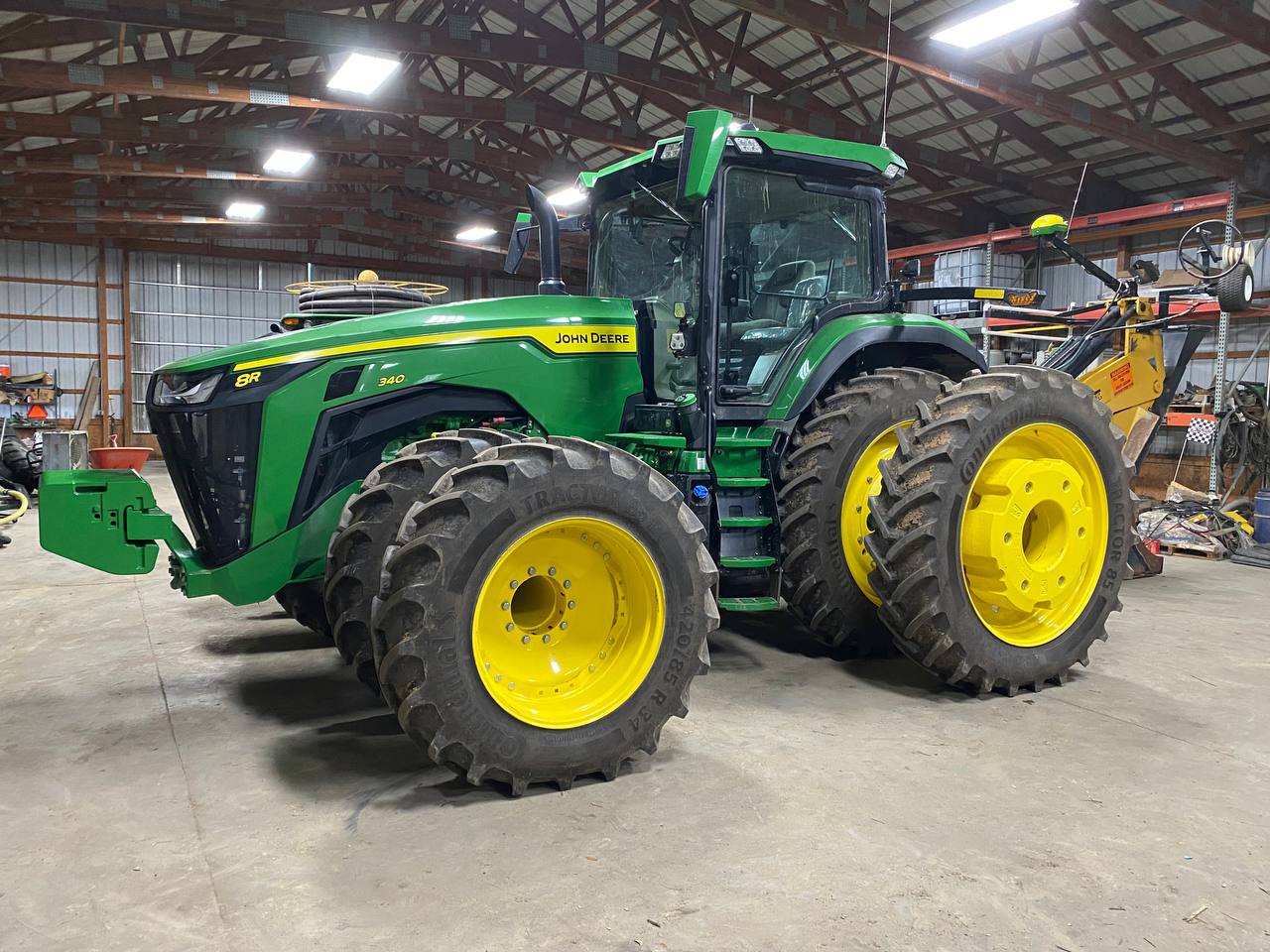
John Deere 8R340 Tractor Tier5 Now Available
Performance Tunes and DEF delete available now!
Read more →
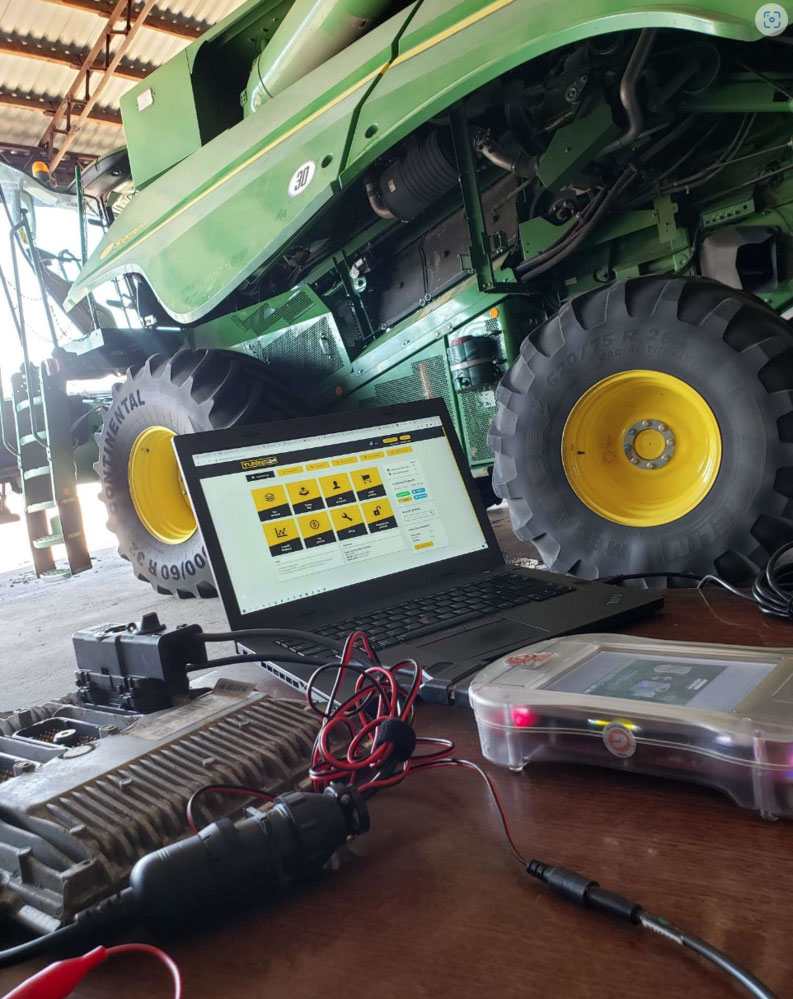
John Deere DPF delete for a harvester
Unlock the full potential of your John Deere harvester with a DPF delete.
Read more →